PineInchNenis69 wrote:
Wrong. Most cops carry 9mm's, wussy ass rounds compared to a .45, .40, 10mm, .357mag, .44mag, etc... Also statistics have shown police are HORRIBLE in gunfights, they miss like 90% of shots fired in real life shooting situations. Sure it's still probably a non issue, but the police for the most part are no better with a gun than Joe Schmoe.
I don't know about fargo or bismarck, but I've read on the Minot Police department's website that Officer's in Minot are ONLY allowed to carry 9mm or .45ACP/AUTO, in semi automatic, of reputable manufacture. Meaning .357, .40, .44, and 10mm are not allowed by the Minot PD.
Furthermore as to your post, don't be so quick to label a 9mm a pussy gun. Perhaps they are smaller and have less "stopping power", but please remember that a .22 if placed properly is a lethal round.
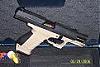
I speak from personal experience when I say this, but I personally went from carrying a Walther P99 .40 to a P99 9mm because of the larger mag capacity, the more affordable ammo(winchester white box in 9mm is almost half the cost of .40), and overall it's a smaller frame which is easier to conceal.
Furthermore the "stopping power" of a round is not calculated merely by velocity or caliber. It depends on the trauma caused by the round. That is, to say that a .40 FMJ is deadlier than a 9mm JHP would be a false statement. Full metal jacketed rounds are designed more or less to go through objects, in modern ammunition FMJ is most commonly used for target rounds, and in LE/military situations for armor piercing rounds.
Jacketed hollow points on the other hand are designed to mushroom, which will cause a lot more trauma than the FMJ round.
Most cops are trained to be just as lethal with a .22 as with a 9mm, .40, .45, or any larger bore weapon. The emphasis is not on caliber or muzzle velocity, or even weight(grain). Sure most agencies have standards and requirements/recommendations. However when ANY law enforcement agent is trained, be it border patrol, city, county, state, or federal, the emphasis is not on the weapon or cartridge itself. The ephasis is on SHOT PLACEMENT.
You can shoot someone in the leg with a 12 gauge, most damage it can do, sever the limb, they can bleed out if medical treatment is not received in time, however, they would still have time to shoot back.
If you shoot someone in the upper spine(between the shoulders and the base of the skull) with a .22, you can paralyze them from the neck down and would have no ability to shoot back.
Caliber does not matter, shot placement does.